


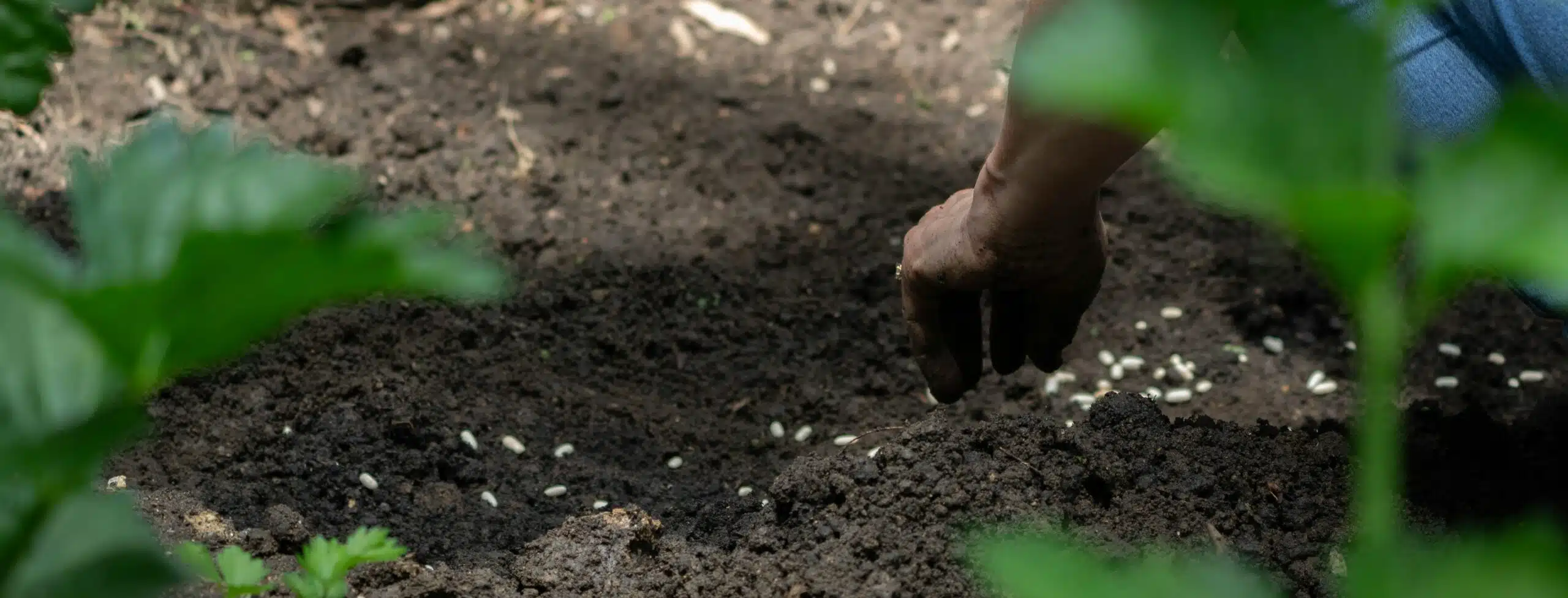
What you sow is what you reap
One of my early summer jobs growing up was working for a seed company. We would take the scientifically engineered seeds and plant them in test plots all over the black soil and sweltering heat of South Texas. Once the seed produced a crop, we meticulously tested it for health and high yields, logging copious notes in a detailed report. Each seed was uniquely designed to produce the maximum amount of produce. These were pretty powerful seeds!
A powerful seed doesn’t grow unless it’s planted
But in all the time I worked for this company, I never saw one seed that grew in the bag. For the seed to produce fruit, it had to be planted. In much the same way, you hold in your hand the powerful seed of the Gospel.
The Gospel is a powerful seed that must be scattered
The Apostle Paul said that the Gospel is “the power of God for salvation to everyone who believes,” (Romans 1.16 ESV). It is powerful enough to change the eternal trajectory of a person’s life from hell to heaven. But this powerful seed of the Gospel has to be sown. It cannot bear fruit sitting in your mind or in your mouth. It has to be scattered.
Jesus shows us how to scatter the seed
Jesus told a parable about how to scatter the seed of the Gospel in the field God has given you: “A farmer went out to sow his seed. As he was scattering the seed, some fell along the path; it was trampled on, and the birds ate it up. Some fell on rocky ground, and when it came up, the plants withered because they had no moisture. Other seed fell among thorns, which grew up with it and choked the plants. Still other seed fell on good soil. It came up and yielded a crop, a hundred times more than was sown,” (Luke 8.5-8 NIV).
Jesus described a sower going out to sow. As he walked his field and broadcasted the seed from his hand, the seed fell on different kinds of soils. Now this parable was designed to show you and me how to share the Gospel with the people in our field.
Different soils reflect different hearts
Later, Jesus explained the parable; “The seed is the word of God. Those along the path are the ones who hear, and then the devil comes and takes away the word from their hearts, so that they may not believe and be saved. Those on the rocky ground are the ones who receive the word with joy when they hear it, but they have no root. They believe for a while, but in the time of testing they fall away. The seed that fell among thorns stands for those who hear, but as they go on their way they are choked by life’s worries, riches and pleasures, and they do not mature. But the seed on good soil stands for those with a noble and good heart, who hear the word, retain it, and by persevering produce a crop,” (Luke 8.11-15 NIV).
The seed is the Gospel. It is the power of God that brings salvation. The sower is you. As you talk with people about Christ, you are sowing the seed of the Gospel. The different soils represent the hearts of the people around you who will hear the Gospel.
Four types of responses to the Gospel
Jesus said there are four kinds of people who hear and respond to the Gospel.
1. First is the hard-hearted person. This is the person who is angry with God or calloused and indifferent to spiritual things. Just like the seed that hits the hard ground and can’t break through, this person hears the Gospel, but is unmoved by it. It just bounces off this person’s heart. Before long, Satan comes along and removes it, so this person can’t even remember it.
2. Second is the shallow person. This person hears and receives the Gospel with great joy. You will be excited thinking, “This person has really received Christ!” But after a while, when difficulty comes, this person will begin to fade away because he or she never really put down any spiritual roots.
3. The third is the distracted person. This person loves Jesus and responds to the Gospel, but because they are so distracted with the worries, riches and pleasures of this world, this person never really produces anything spiritually.
4. The fourth person is the receptive person. This person hears the Gospel, repents of sin and turns to Jesus in faith and never looks back. This person continues to grow and obey God’s Word. Before long, this person is different altogether and helps others to know Christ by sharing all that God has done in his or her life.
Why Jesus told the parable of the sower
You may be asking, “Why did Jesus tell this story?” He wanted us to be prepared for the kind of responses we will encounter as we share the Gospel. But notice, it’s not the sower’s job to judge the soil. His job is just to scatter the seed.
Your role is not to judge the soil, but to scatter the seed
As you identify your field and begin to pray with believers for the lost, as you start to serve others and cultivate relationships, and as God brings you a person of peace who will open doors of opportunity, you must scatter the seed. You must open your mouth and tell them about Jesus.
Two ways to scatter the Gospel seed
What does that look like? There are two ways to scatter the seed of the Gospel: one way is publicly through large groups. This may be an event that you use to gather people to hear the Gospel. Jesus shared the Gospel this way. often Jesus would draw massive crowds and teach them about God’s kingdom.
Even the parable of the sower is set in the context of Jesus teaching a large crowd. (Luke 8.4 NIV) says, “While a large crowd was gathering and people were coming to Jesus from town after town, he told this parable.” Mass evangelism efforts can be very effective when done well. Large events sponsored by men like Billy Graham and Greg Laurie have effectively led hundreds of thousands of people to Christ.
Another way to scatter the seed is privately through personal one-on-one conversation. This is what Jesus sent His men out to do. He sent them to go from village to village and personally tell how Jesus changed their lives.
As you are cultivating relationships with people in your field, I recommend you add the names of people who are open and receptive to your “Top Five” list. This way, you can begin to pray for them specifically.
Share your story and the Gospel boldly
Once you have done this, look for opportunities to move the conversation toward sharing the Gospel. Share your “crisis story” of how Jesus met your needs. Share your “Christ story” of how you came to faith in Jesus. Then, share the Gospel story using the path diagram. Share boldly what Jesus has done for you. Scatter the seed and then trust God with the results.
This blog features an excerpt from one of our books, Reach Your World.